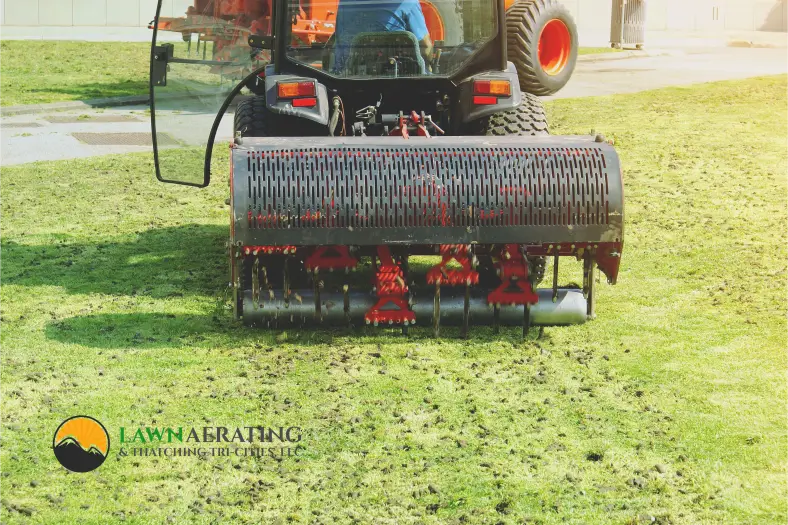
Aeration does a lot of heavy lifting for yards in the Tri-Cities and surrounding areas. Our clay-based soil, summer heat, and constant irrigation make compaction a year-round issue, so a little preparation before your aeration service — and a few simple steps afterward — can make a huge difference in how your lawn responds.
The Day Before Your Aeration Appointment
Water the Lawn
Give your lawn a good drink the day before we arrive. Moist Eastern Washington soil pulls cleaner, deeper cores than dry, compacted ground. You don’t need to soak it — just enough moisture to soften the top few inches of soil.
Mark Sprinkler Heads and Anything Buried
If you know where your sprinkler heads or shallow utility lines are, mark them with flags or anything easy to spot. Many yards in the Tri-Cities have older irrigation systems or shallow lines, and marking them helps us avoid accidental damage.
Pick Up the Yard
Toys, hoses, lawn décor, sticks — anything sitting on the grass can get in the way. Clearing the yard helps us aerate evenly from edge to edge so the entire lawn benefits.
Be Aware of Your Soil’s Condition
If you’ve noticed hard, cracked ground, water runoff, or areas where grass struggles, aeration will help. Some homeowners like to test their soil pH, especially in neighborhoods with heavy irrigation, but it’s not required. If you know your soil tends to run acidic or compact easily, we can make additional recommendations afterward.
What To Do After Aeration
Overseed the Lawn
Those little holes left behind are perfect seedbeds. This is the best moment to add new grass seed, especially if you have thin patches or want a thicker lawn going into summer. In Eastern Washington, overseeding after aeration helps lawns recover from heat stress and fills in areas that naturally thin each year.
Fertilize the Yard
Aerated soil absorbs nutrients far better than compacted ground. A balanced fertilizer — one that fits the season — will feed the roots and kick-start new growth. Spring calls for a lighter blend, while fall feeding helps the lawn store energy for winter.
Water Consistently (But Not Too Much)
Keep the lawn lightly watered after aeration, especially if you overseed. The goal is steady moisture, not puddles. In our dry climate, the top layer of soil dries out fast, so short, regular watering is more effective than heavy soaking.
Mow Once the Lawn Has Settled
You can start mowing again once the lawn looks settled and new seedlings (if overseeded) begin to take hold. Usually, that’s about a week later. Keep your mower blades sharp and avoid cutting off more than the top third of the grass. This reduces stress and helps the lawn thicken naturally.