
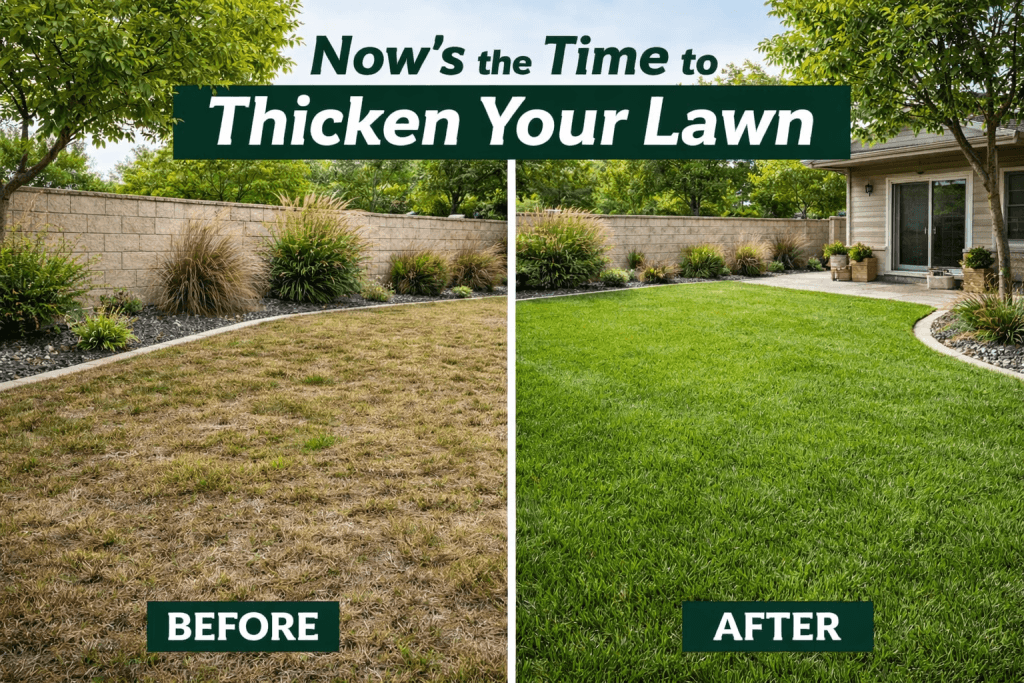
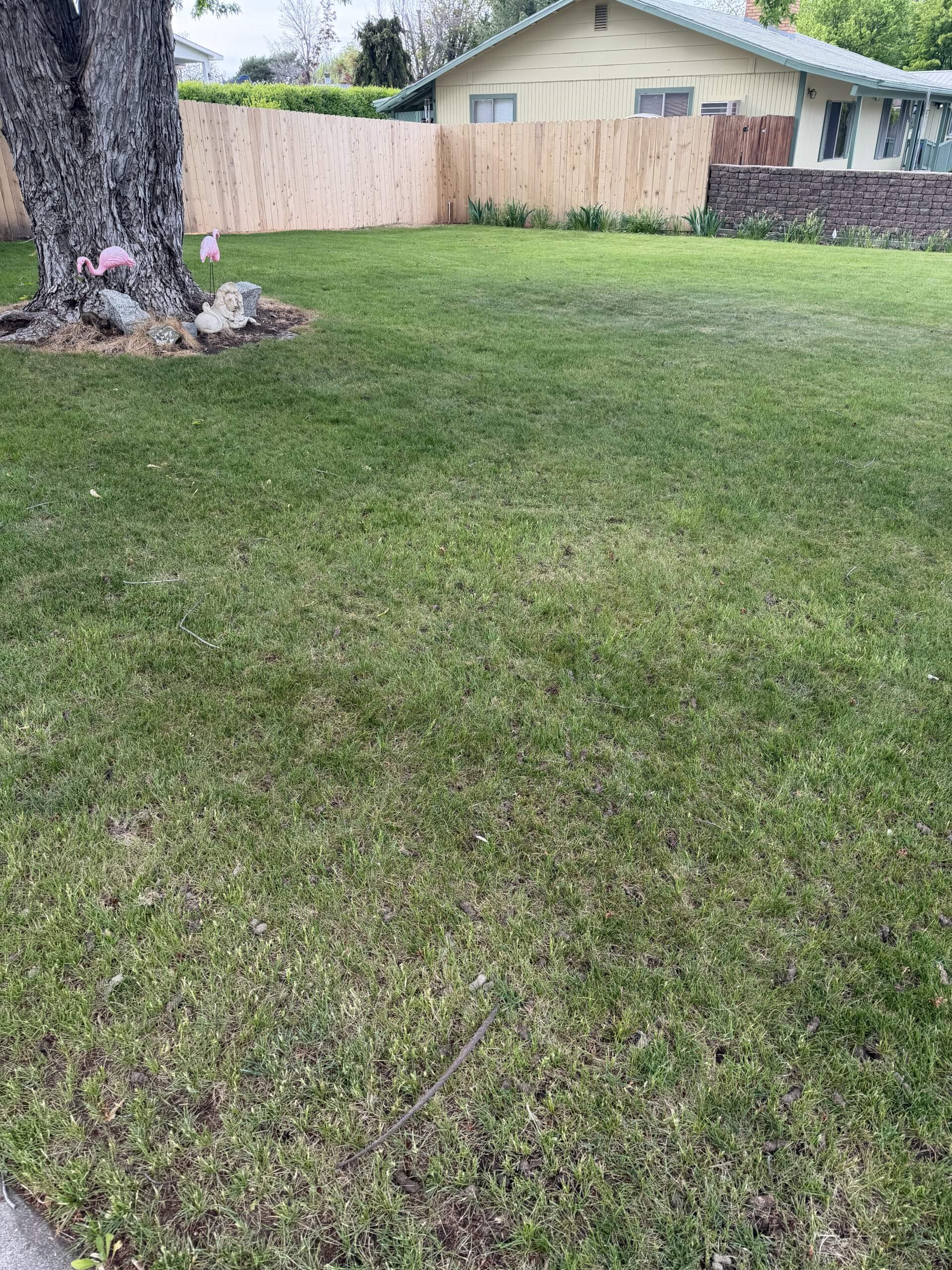
If your lawn looks thin or patchy right now, it’s not going to magically fill in on its own. Spring is one of the best times in eastern Washington to get fresh seed down while the soil is warming and irrigation is back on, giving your lawn a better chance to fill in before the hottest part of summer.
If your lawn looks thin or patchy right now, it’s not going to magically fill in on its own. Spring is one of the best times in eastern Washington to get fresh seed down while the soil is warming and irrigation is back on, giving your lawn a better chance to fill in before the hottest part of summer.
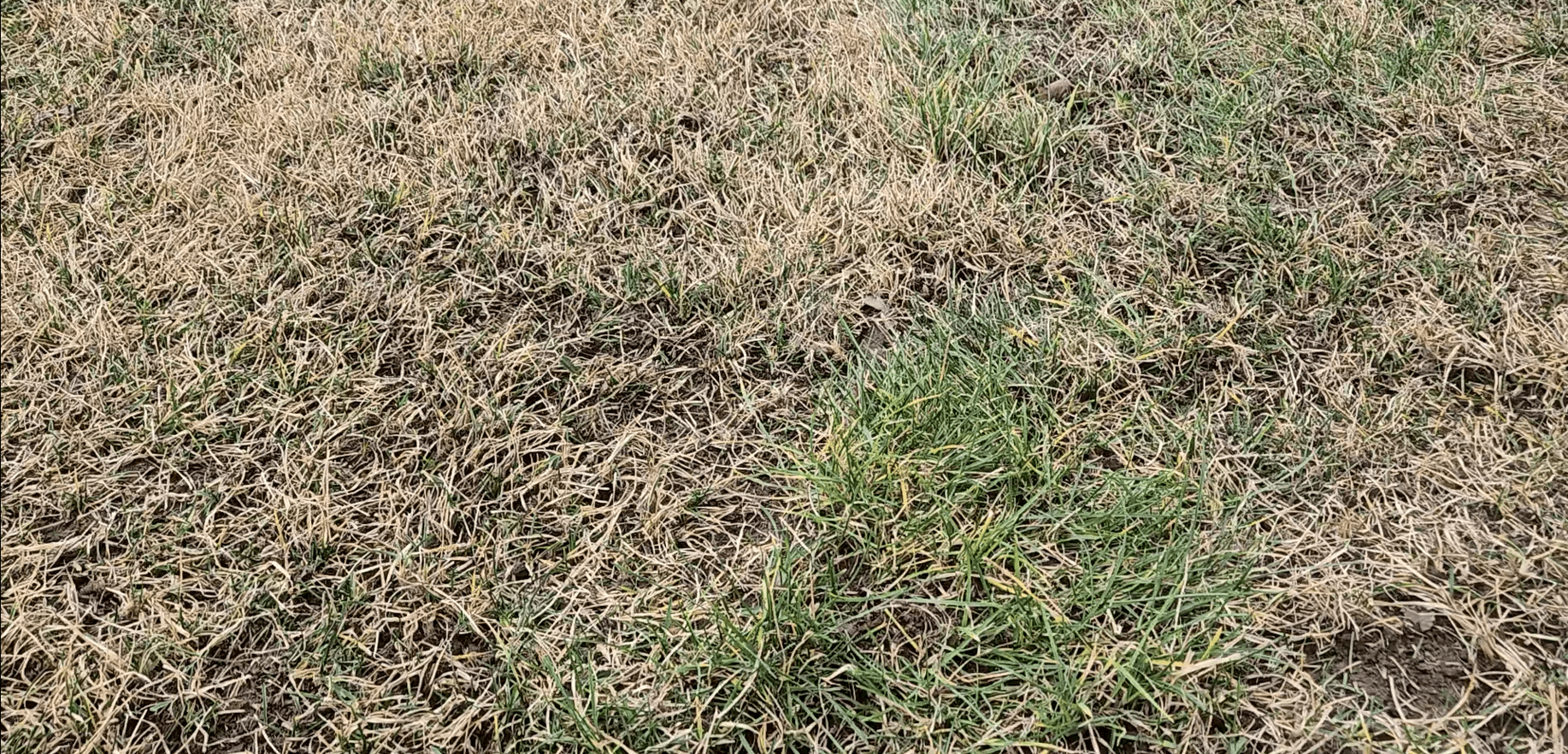
<-Ideal for thin, patchy grass
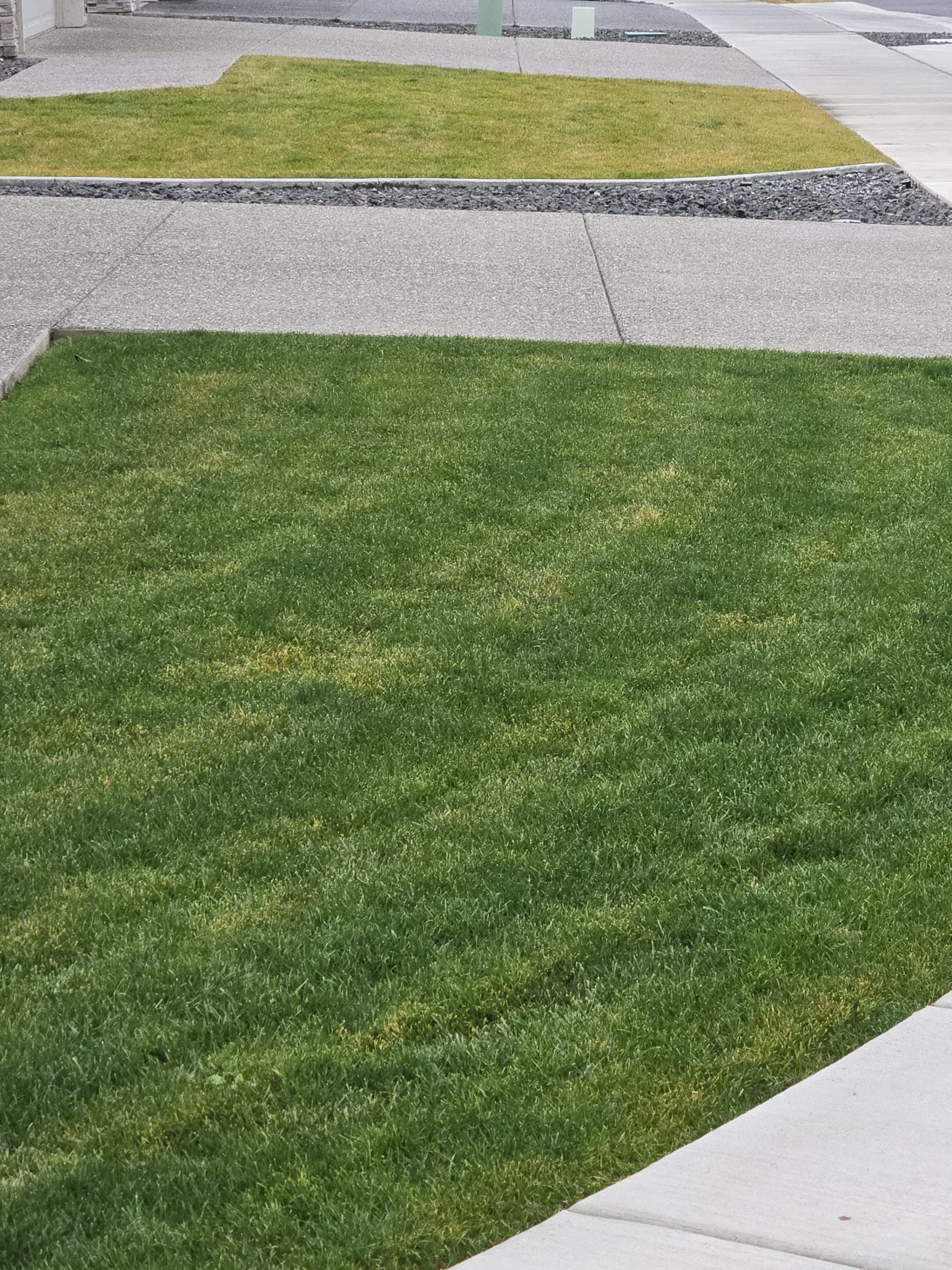
If your lawn already looks sparse, weak, or patchy in April, summer usually does not improve it. Water helps, but water alone does not create new grass where density is missing. The fix is getting fresh seed into the lawn while conditions are working in your favor.
This is the window to help your lawn:
Great timing for spring seeding in Eastern Washington
Spring gives new seed a good chance to get started because the ground is warming up, and most homeowners have turned their sprinklers back on.
Washington State guidance supports April and May as a prime window for improving thin lawns with overseeding, and also notes that thatching + overseeding + fertilization is a magic combination.
Early seed can also help fill weak areas and choke irrigation weeds.
Ground Is Warm
+
Water Is On
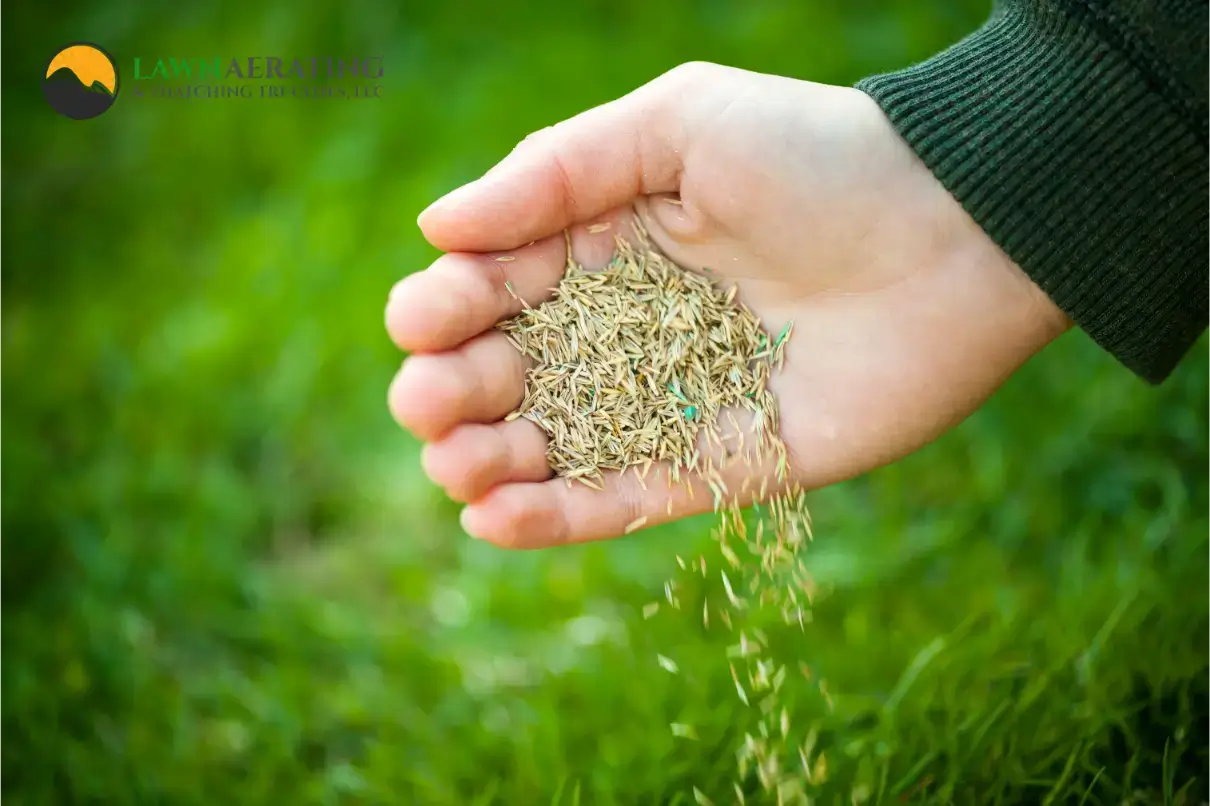
Add quality seed to a thin lawn in spring, and watch it bloom!



Built for Tri-Cities lawns
We add fresh grass seed into existing lawns to help fill in weak, thin, and patchy areas. For homeowners in Kennewick, Richland, Pasco, and West Richland, this is one of the smartest spring lawn services you can do before summer stress sets in.
Our 3-Way seed blend is selected for our climate:
That means better color, better fill-in, and a better shot at lasting through hot Eastern Washington summers.
Have A Question ?
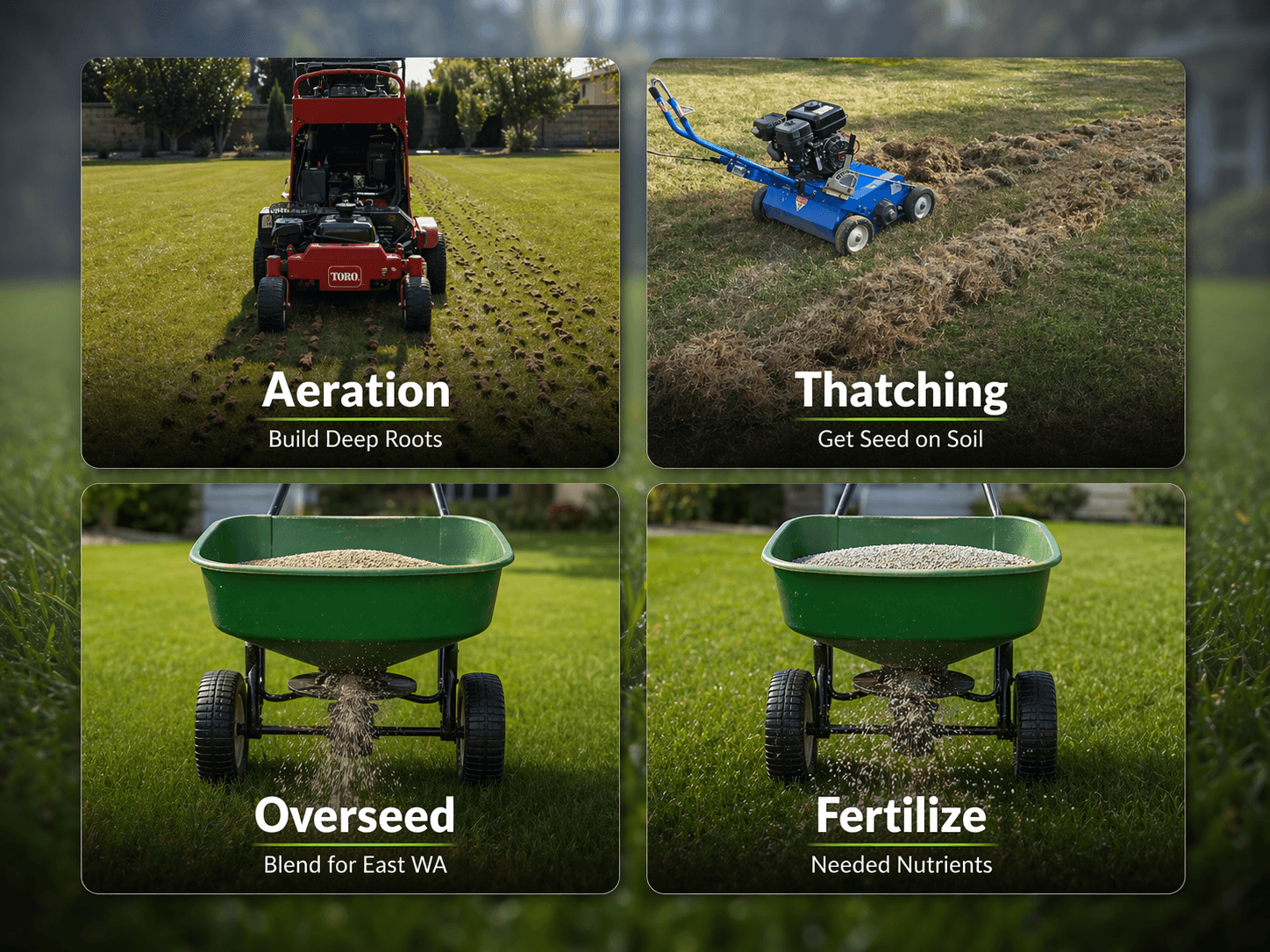
Even better when paired with aeration, thatching, and fertilizer
Overseeding works. But when you combine it with the right supporting services, the results can get a lot better.
Fresh seed needs nutrients to grow fast and healthy. Fertilizer helps support establishment, color, and stronger growth.
If your soil is compacted, aeration helps open it up so seed, air, and water can get where they need to go. Washington lawn guidance specifically recommends aeration and overseeding together for thin areas.
If there is too much dead material sitting on top of the soil, thatching can help seed reach the lawn surface more effectively and improve contact where needed.
For many properties, the strongest combination is:
Each service helps the next one work better.
Have A Question?
Our Spring overseeding services in Tri-Cities, WA extend across multiple communities, including:
We are not looking to drive all over creation. We focus on the service area we know, and we want to help local homeowners get ahead of summer lawn stress while the timing is right.

Have A Question ?
Years Of Experiance
If you are looking for overseeding in Tri-Cities, grass seeding in Kennewick, lawn thickening in Richland, patchy lawn repair in Pasco, or spring lawn seeding in West Richland, this service is designed for that exact problem.
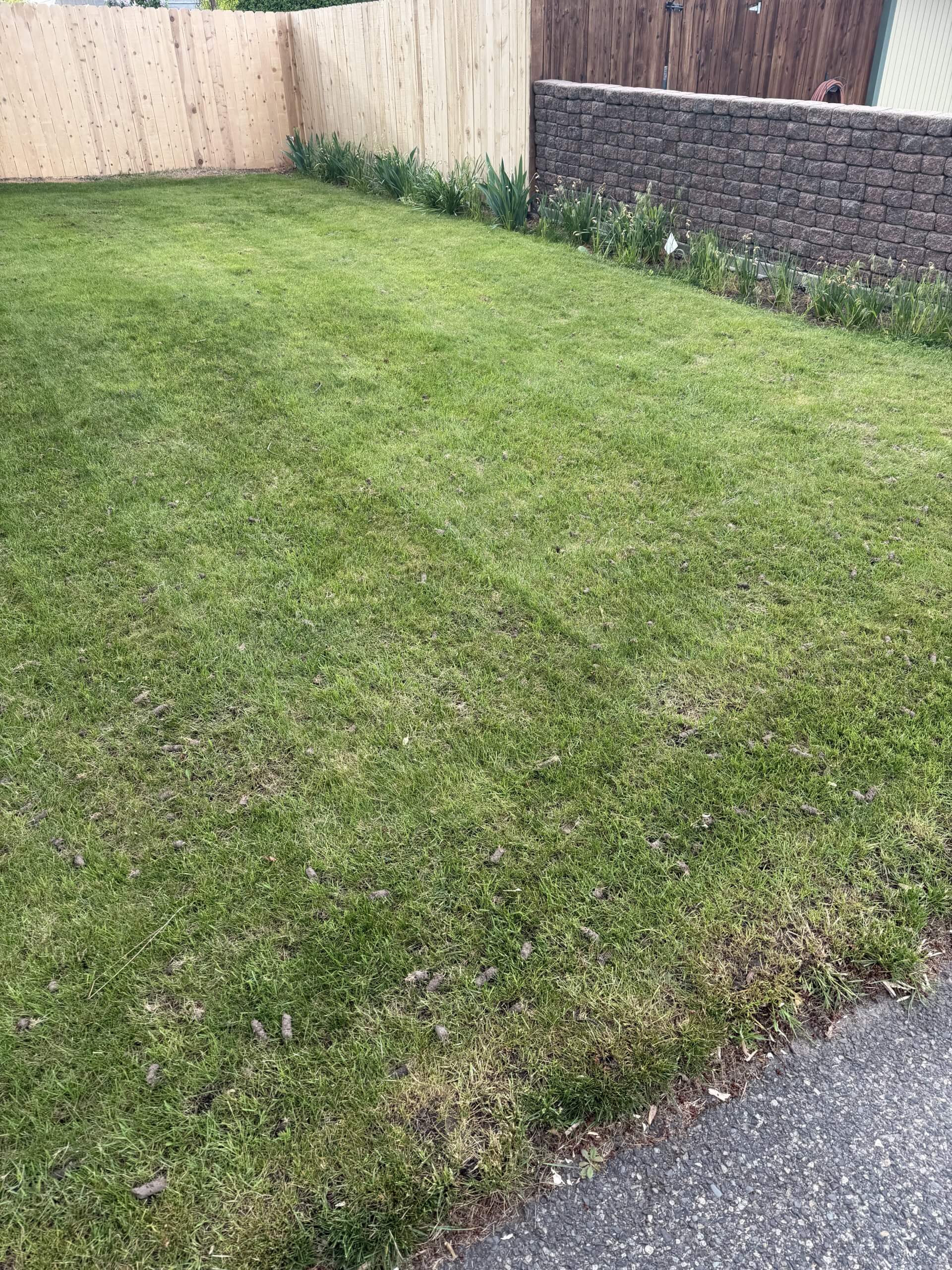
Many homeowners across the Tri-Cities notice the same thing each spring: the lawn is alive, but it is not thick. There are weak areas, sparse zones, and patches that never really recovered from last summer. That is where overseeding comes in.
Adding fresh seed in spring can help increase lawn density, improve appearance, and give the yard a better shot before the hottest weather of the year. Washington State lawn guidance supports spring as a key window for improving thin lawns, especially when combined with aeration where compaction is present.
For many homeowners, overseeding is also a smart entry point. From there, lawn results can often be improved further with:
If your goal is a lawn that looks fuller, greener, and more prepared for summer, spring overseeding is one of the best places to start.
Call Us Anytime
Overseeding is a powerful way to restore your yard, but it works even better when combined with the right supporting services.
Every Tri-Cities lawn is different. Whether you just need a quick overseed in Pasco or a full restoration stack in Richland, we can help you determine the best plan for your specific soil conditions before the summer heat arrives.

Have A Question ?
What would you like to know? We’re here to answer all your questions. We love talking lawns!
Overseeding means adding fresh grass seed into an existing lawn to help fill in thin, patchy, or weak areas without starting over from scratch.
Because the soil is warming up, lawns are waking up, and sprinklers are usually back on. Washington lawn guidance identifies April and May as a strong window for improving thin lawns.
It helps with thin grass, patchy spots, weak areas, poor density, and lawns that just don’t look full. It also squeezed out new weeds brought into your lawn from irrigation.
YES! A thicker lawn usually looks richer and greener, especially when the seed blend is chosen for local conditions. (And especially when paired with fertilization)
We use a 3-way blend selected for our area: 80% bluegrass, 10% rye, and 10% fescue. Perfect for optimal color all season long. (For the absolute best color, fertilize with the new grass seed)
YES! If the lawn is compacted, aeration can make overseeding work better by opening up the soil. Washington guidance specifically recommends aeration and overseeding together for thin areas. If you have dead winter grass on top of your soil, thatching will remove the old grass and thin out your lawn. This is the perfect time to overseed.
Fertilizer can help fresh grass grow faster and healthier, which is why it is one of the best bundle options.
That depends on watering, temperatures, lawn condition, and seed type. Typically 2- 4 weeks. You usually won’t see a dramatic overnight change, but new grass should begin to establish as conditions remain favorable.
Absolutely! A thicker lawn can help reduce open space where weeds tend to move in, although overseeding itself is not a weed-control treatment.
Yes. It is usually easier to improve a lawn while the problem is still manageable than to wait until it gets worse.