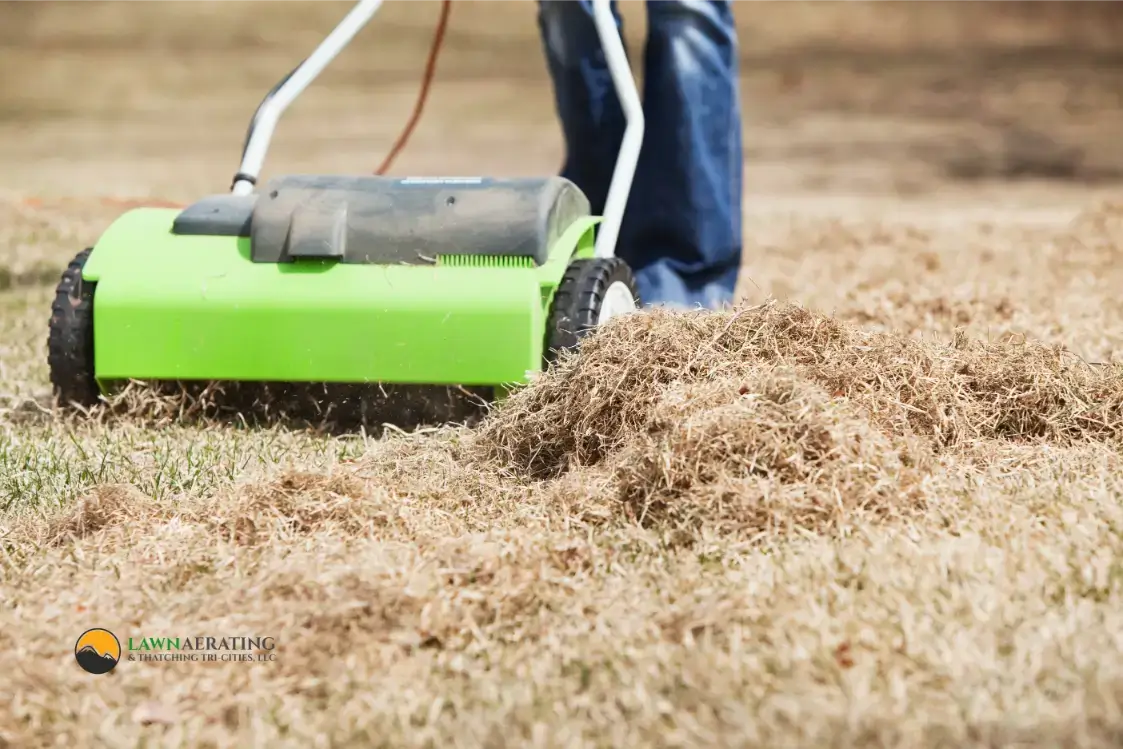
Right after a lawn is dethatched, it often looks a bit shocking—thin patches, exposed soil, uneven color. Many homeowners in Eastern Washington start to worry that something went wrong. But rest assured: this is completely normal and actually a sign that the dethatching worked exactly like it should.
Dethatching removes the thick, matted layer of dead grass, roots, and built-up organic material that forms between the soil and the living grass blades. In Eastern Washington—where we rely on irrigation, have clay-heavy soils, and experience long hot summers—thatch builds up quickly. That layer prevents water, nutrients, and air from reaching the root zone.
When the thatch is finally pulled away, the lawn shows its “real” condition underneath. It may look rough, but what you’re seeing is the start of a much healthier yard.
Why Your Lawn Looks Thinner After Dethatching
Thatch can hide a lot of issues. Once it’s removed, the lawn may look:
- Thin or patchy
- Light in color
- Rough or dry on the surface
- Exposed down to the soil in places
This doesn’t mean the dethatching hurt your lawn—it means your lawn can finally breathe again.
Think of dethatching like pruning a tree: it may look a little bare at first, but the new growth that follows is stronger, thicker, and healthier.
Over the next few weeks, the lawn will start filling in as fresh grass shoots emerge and roots begin to strengthen.
Why Dethatching Is the Perfect Setup for Aeration, Overseeding & Fertilizing
Once thatch is gone, your yard is in the ideal condition to receive other treatments—especially here in Eastern Washington, where compaction and heat stress take a toll on turf.
✔ Aeration
Our clay soils and frequent irrigation make Eastern Washington lawns prone to compaction. Aeration opens up the ground, improves airflow, and helps roots expand more easily. Combined with dethatching, the soil becomes far more receptive to water and nutrients.
✔ Overseeding
With thatch out of the way, seed makes direct contact with the soil—crucial in our dry climate. Overseeding quickly fills in bare or thin areas, thickens the turf, and improves overall lawn uniformity.
✔ Fertilizing
Without a thick thatch layer blocking it, fertilizer can finally reach the root zone. A balanced fertilizer right after dethatching gives your lawn the energy needed to bounce back quickly and grow stronger.
Together, these three steps accelerate recovery and help Eastern Washington lawns build heat tolerance and better color throughout the season.
What About Moss? (Yes, It Happens Even Here)
Even though Eastern Washington is dry, moss is still common—especially in shady, compacted, or frequently watered areas.
Dethatching removes a lot of it, but rarely all of it. Applying moss killer after dethatching helps eliminate what’s left so it doesn’t regrow and spread. Once the moss dies back, overseeding those areas helps healthy grass fill in, preventing moss from returning.
If moss has been a recurring issue, dethatching + moss control can make a significant long-term difference.
What to Expect in the Next Few Weeks
Dethatching provides immediate benefits beneath the surface, but visual improvements come with time. Here’s what most Eastern Washington homeowners typically see:
1–7 days
- Lawn still looks thin
- Watering and fertilizing begin supporting new growth
- Soil starts settling
- Exposed areas soften and begin recovering
7–21 days
- New green growth appears
- Overseeded areas begin sprouting
- Lawn color starts to even out
- Thin spots slowly fill in
3–6 weeks
- Noticeable thickening of the lawn
- Improved color, texture, and density
- Weak areas begin blending with the rest of the yard
6–10 weeks
- Lawn reaches its “new normal”—healthier, thicker, and greener
- Continued watering and fertilizing further enhance recovery
A Healthier Lawn Starts With a Clean Slate
Dethatching is one of the most beneficial lawn treatments for Eastern Washington’s conditions. It removes the barrier that blocks nutrients, helps the soil breathe again, and sets the stage for stronger root growth.
Think of dethatching as a reset button. You’re giving your lawn the opportunity to rebuild from the ground up—better, greener, and far more resilient to heat, irrigation demands, and seasonal stress.
If you’d like help with aeration, overseeding, or moss control anywhere in Eastern Washington, we’re always here to help your lawn get the best possible fresh start.