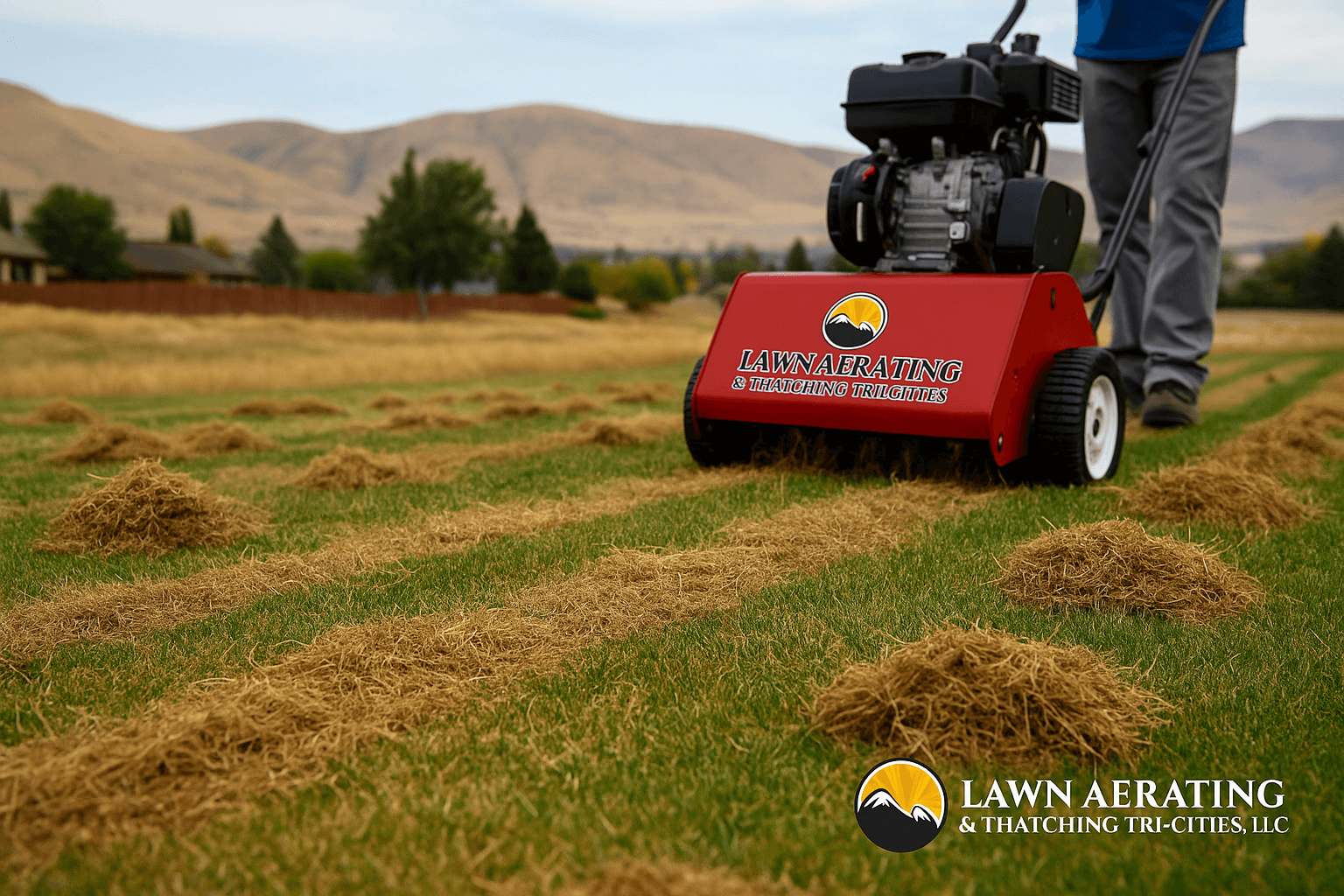
In Eastern Washington—where our lawns deal with hot summers, compacted soils, and irrigated turf—it’s completely normal for a freshly dethatched yard to look a little rough at first. Many Tri-Cities, Pasco, Kennewick, and Richland homeowners see thin or patchy spots right after dethatching and think something went wrong.
But don’t worry—this is exactly what your lawn should look like.
That “ugly phase” is a sign the process worked.
Dethatching removes the thick, spongy layer of dead grass and roots that builds up on irrigated Northwest lawns. In our region, thatch builds fast because warm weather, clay-heavy soil, and regular watering create the perfect conditions for it to develop. Over time, thatch blocks nutrients, water, and air from reaching the soil.
Once it’s pulled up, you’re finally seeing your lawn’s real condition—and that’s when it’s ready to start growing healthy again.
Why Your Lawn Looks Thinner After Dethatching
Eastern Washington lawns often hide a lot of issues under the thatch layer. When it’s removed, you may notice:
- Bare or thin patches
- Exposed soil
- Uneven color
- A slightly “rough” or dry look
This doesn’t mean the grass was damaged. It means the grass can finally breathe. Think of dethatching like a deep haircut—lighter now, but healthier growth is coming.
Within a couple of weeks, you’ll see new green shoots filling in.
Why Dethatching in Eastern Washington Pairs Perfectly With Aeration, Overseeding & Fertilizing
Right after dethatching is one of the best times to strengthen your lawn—especially in a dry, compact-soil area like Eastern Washington.
✔ Aeration
Our soil tends to compact easily, especially in sprinkler-watered neighborhoods. Aeration loosens the ground, allowing roots to grow deeper and absorb water more efficiently.
✔ Overseeding
When thatch is gone, seed can reach the soil directly. This is crucial in Eastern Washington because thin lawns dry out faster and are more prone to weeds. Overseeding fills in weak spots with thick, drought-tolerant new grass.
✔ Fertilizing
Without the thatch barrier, fertilizer finally reaches the root zone. A balanced nutrient boost helps the lawn recover faster—especially heading into the heat of summer or after winter dormancy.
Together, these steps rebuild your lawn into a thicker, greener, and more resilient Eastern Washington turf.
What About Moss? (Yes, Even in Eastern Washington)
Even though we’re known for being dry, moss still shows up in shaded, overwatered, or compact areas—especially on the north side of homes.
Dethatching removes a lot of moss, but usually not all of it. Applying a moss killer after dethatching helps eliminate what’s left so healthy grass can take over. Once the moss dies, overseeding the area prevents it from returning.
If moss has been an ongoing problem, dethatching + moss control is the best first step toward fixing it long-term.
What to Expect in the Next Few Weeks
Here’s what most Eastern Washington homeowners see after dethatching:
1–7 days
- Lawn still looks thin
- Soil starts settling
- Watering and fertilizing begin helping new blades emerge
7–21 days
- New growth begins filling in
- Overseeded areas sprout
- Lawn color becomes more consistent
3–6 weeks
- Noticeable thickening
- Stronger, greener turf
- Bare spots begin blending in
6–10 weeks
- Lawn reaches its new, healthier baseline
- Turf becomes thicker and more resilient to heat, foot traffic, and drought
A Healthy Lawn Starts With a Clean Slate
Dethatching may make your lawn look worse before it looks better, but in Eastern Washington, it’s one of the most important steps for long-term lawn health. It removes the barrier that blocks nutrients, improves water absorption in our dry climate, and prepares your lawn for aeration, overseeding, and fertilizing.
Think of dethatching as hitting the reset button. With the right follow-up care, your lawn will come back stronger, greener, and more drought-tolerant than before.
If you’d like help with aeration, dethatching, overseeding, or moss control anywhere in the Tri-Cities area, we’re always here to make sure your lawn gets the healthiest start possible.