Here in Eastern Washington, our lawns deal with a unique mix of challenges—hot, dry summers, compacted clay soils, heavy irrigation, and cold winters. Even if you water, mow, and fertilize regularly, you may still notice your lawn slowly thinning out over time. Patches that used to stay green start looking a little tired. Bare spots appear after summer heat. Some areas bounce back well, while others seem stuck.
Most homeowners assume something went wrong with their lawn care routine, but in reality, our regional climate naturally wears turf down. Grass ages, soil hardens, and seasons take their toll. Eventually, the lawn just can’t regenerate as quickly as it used to.
That’s why aeration and overseeding—especially done together—make such a dramatic difference in Eastern Washington.
The Perfect Eastern Washington Partnership: Aeration + Overseeding
Aeration
Aeration is the “reset button” your lawn needs. By removing small plugs of soil, you open up compacted ground—something almost every Eastern Washington lawn struggles with due to clay soil and irrigation. Aeration allows air, water, and nutrients to finally reach the roots again.
Overseeding
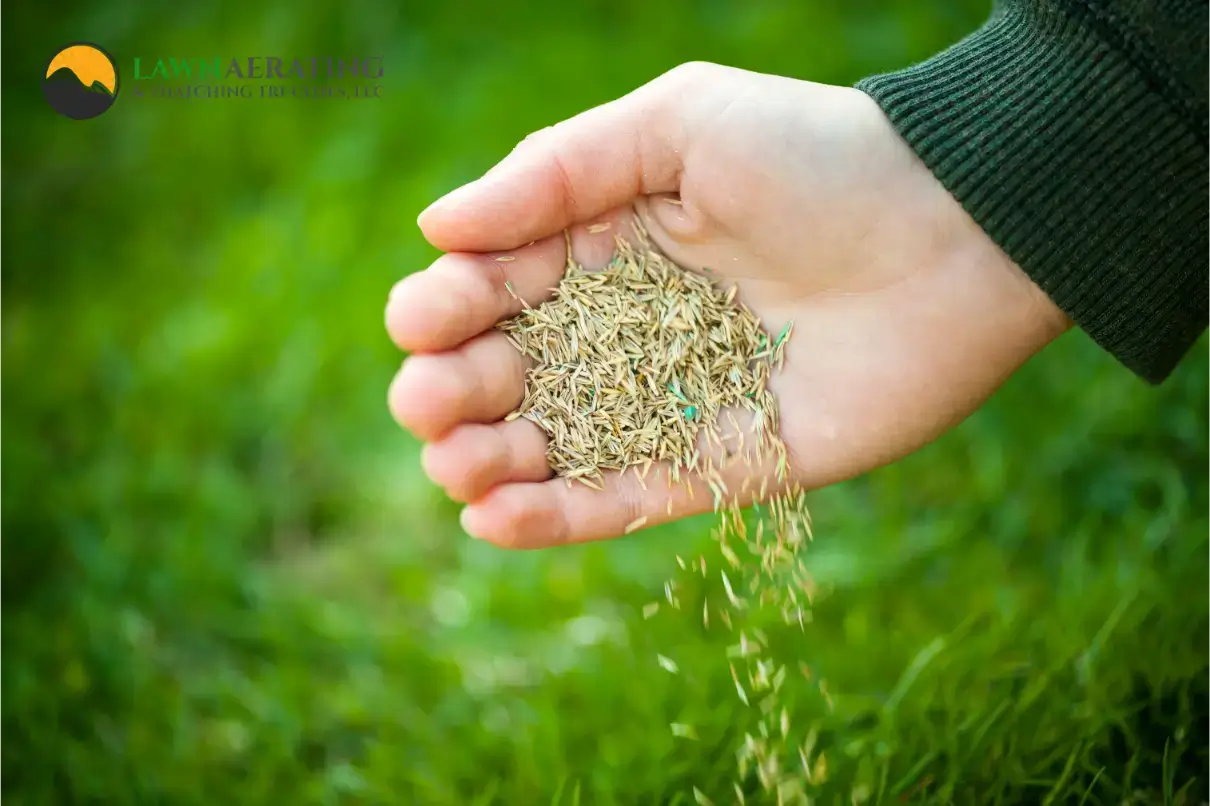
Overseeding adds new, healthier grass varieties into your existing turf. It thickens the lawn, fills in bare or thinning areas, and helps your yard look fuller and more uniform.
Why They Work Best Together
Right after aeration, those open pockets in the soil act like natural seedbeds. The new seed:
- Falls into the loosened soil instead of sitting on top
- Stays moist longer (important in our dry climate)
- Avoids being blown away or eaten by birds
- Germinates faster and stronger
This combination is nearly impossible to achieve with overseeding alone.
In Eastern Washington—where grass struggles through long heat waves, winter dormancy, and hard ground—this pairing is one of the most effective ways to renew a lawn.
Why Eastern Washington Lawns Thin Out Over Time
Even well-maintained lawns in our region naturally lose density because of:
• Hot, dry summers
Our intense heat puts major stress on turf and slows down recovery.
• Compacted clay soil
Most Eastern Washington neighborhoods have dense soil that restricts root growth.
• Heavy irrigation
Sprinkler systems help lawns survive summer but also accelerate thatch buildup and shallow rooting.
• Foot traffic and pets
Kids, dogs, and regular use wear down certain areas faster.
• Seasonal extremes
Cold winters followed by hot summers make it difficult for older grass to keep up.
Over time, the lawn becomes thinner, weaker, and less uniform—unless new seed is introduced.
What Happens When You Overseed After Aeration
Pairing these treatments produces big, noticeable gains. Here’s what typically happens:
- Seed drops into aeration holes, where it’s protected and stays in contact with soil
- New seedlings root deeper, thanks to loosened ground
- Thin areas fill in naturally, without removing existing turf
- The lawn becomes denser, which helps choke out weeds
- Color becomes richer and more consistent, especially in stressed areas
- Overall resilience improves, especially during summer heat or winter bounce-back
Many Eastern Washington lawns look noticeably fuller and greener within just a few weeks.
Benefits You’ll Notice Most in Eastern Washington
1. A Fuller, Thicker Lawn
Bare spots and weak areas fill in with new blades, giving the yard a dense, lush appearance.
2. Better Color and Uniformity
Fresh seedlings brighten up dull or stressed sections, evening out the entire lawn.
3. Improved Heat & Drought Tolerance
New grass varieties are more resilient to our summer temperatures and irrigation patterns.
4. Naturally Fewer Weeds
Weeds thrive on open soil. A thick, healthy lawn leaves them with no room to grow.
5. Cheaper Than Replacing a Lawn
Overseeding renews your existing turf without removing or reinstalling grass.
A Simple Process With Big Results
After aeration and overseeding, the key is consistent watering, especially in our dry Eastern Washington climate. Light, frequent watering helps germination. Once seedlings are established, switching to deeper, less frequent watering builds stronger roots.
A starter fertilizer boosts early growth, and within a few weeks you’ll see new blades filling in the aeration holes and thin spots.
Most homeowners notice clear improvements within the first month, with even more dramatic results over one full growing season.
When Should You Consider Overseeding in Eastern Washington?
Overseeding is recommended if:
- Your lawn has bare or thinning areas
- The turf loses color quickly in heat or cold
- Water runs off because the soil is too compacted
- You deal with weeds every spring or summer
- You want a thicker, softer lawn
- The grass looks worn after summer stress
- You simply want a healthier, greener yard
Even lawns that “look fine” benefit from overseeding—it’s like adding reinforcement for the future.
A Thicker, Greener Lawn Is Absolutely Within Reach
If your lawn doesn’t look as full or healthy as you want—even with regular mowing, watering, and fertilizer—you’re not alone. Eastern Washington lawns require renewal, and overseeding after aeration is one of the smartest, most effective ways to bring life back into your yard.
Aeration opens the door. Overseeding brings new growth.
Together, they help your lawn become thicker, greener, and more resilient than it’s been in years.
And the best part? You don’t need to start over or tear anything out. With the right timing and care, your lawn can show noticeable improvement in a single season.
If your yard is ready for a refresh—or you want that lush, soft, healthy lawn that stands out in the neighborhood—we’re here to help you get there.